Racing

 League

 Rugby

 Football

 Cricket

 Golf

 Sport Nation

 Motorsport

 Netball

 Basketball

 Combat Sports

 Olympics

 Other Sports

 The Field of Dreams comp is back!
Perfecting the Rubik's Cube: The underrated improvement made by Rennie's All Blacks
Henry Lee in Edinburgh • November 9th, 2026 7:33 am

All Blacks celebrate at Murrayfield | Photo: Photosport
Few things test your patience quite like a Rubik's Cube.
International rugby can often be just as confusing, requiring a fair bit of patience and problem-solving to reach the right solution.
But as you hit dead ends trying to pair the colours together, there's a sense of satisfaction in eventually completing a task that demands significant mental application.
Compare that with the All Blacks’ dominant second-half performance at Murrayfield, where they had it far from their own way. Scotland played well enough in the first half to edge closer to a famous victory, but the second half was chalk and cheese.
Dave Rennie’s side showed signs they are starting to get the maze that is International rugby.
They started to crack the Scottish code in several ways, squeezing Gregor Townsend’s side in ways the Springboks did during Rugby’s Greatest Rivalry.
But a key point is that it wasn’t from the get-go. The 67,148-strong home crowd had reason to hope heading into halftime oranges. Rennie and the All Blacks coaching staff clearly had words, effective ones.
The All Blacks turned to a contestable kicking game in the second half, retrieving the ball at will and forcing Scotland to make error after error.
Scott Barrett, Fabian Holland, and the rest of the powerful forwards started using the side’s “barge” game, as Rennie likes to call it, at the breakdown where they gained significant reward.
They brought out trick lineout plays, sweeping backline moves rather than lateral side-to-side movement, and beat the Scotland defence with dynamic footwork with ball in hand.
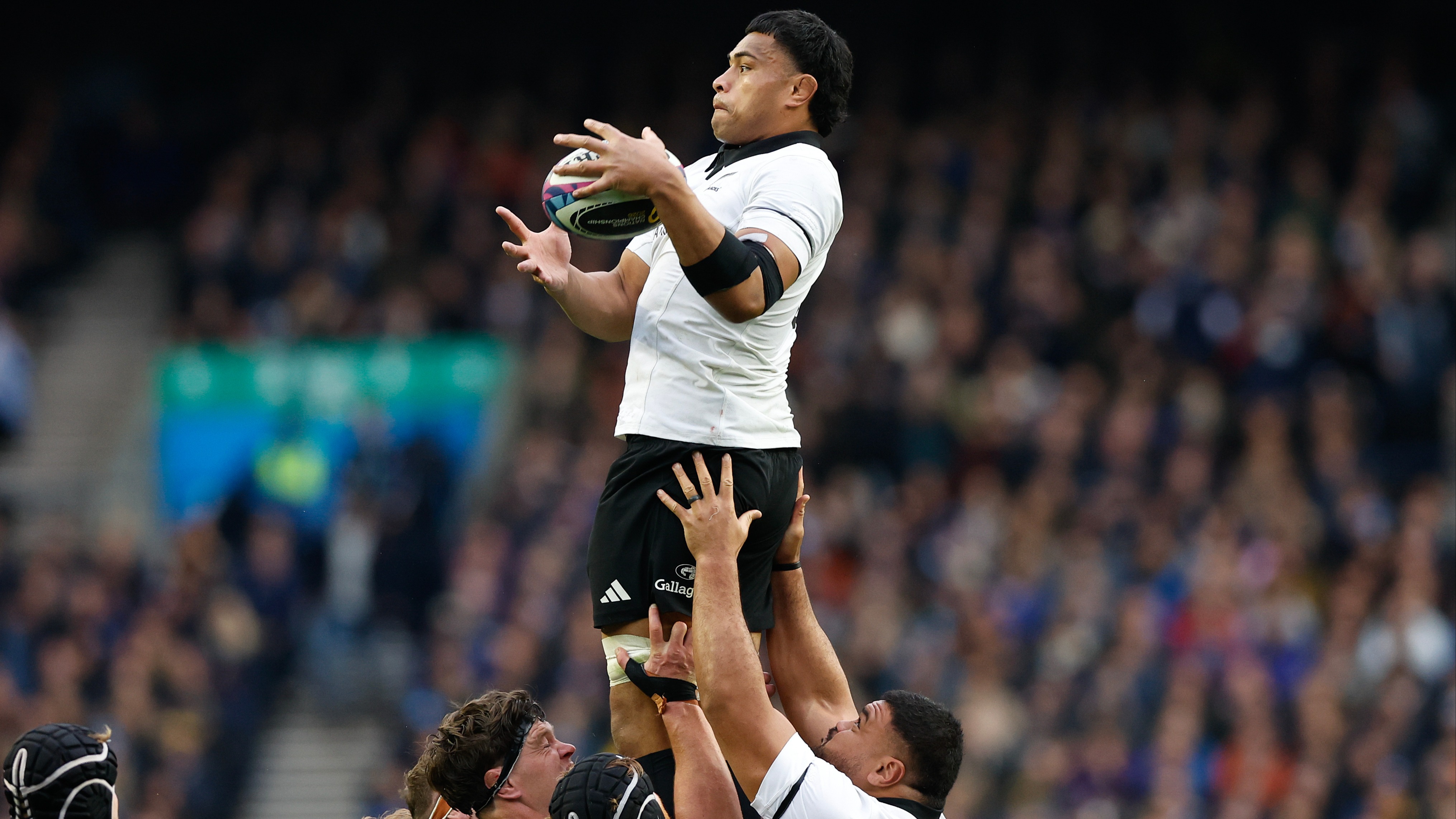
Tupou Vaa’i | Photo: Photosport
But the changes behind these improvements are promising.
Rennie has learnt from the All Blacks of old, in 2025, where lessons weren’t learnt, at least not quickly enough.
The All Blacks had a third-quarter problem, and they couldn’t shake it. They had an inability to finish chances they had created. But Rennie is making it clear they need to make adjustments on the fly, and be world-class at it.
Rennie’s side gave Scotland too many 22-meter entries on Saturday (local time) in the first forty minutes. Sound’s simple, but they then limited that in the second-half which helped keep the hosts scoreless.
Rennie said Tana Umaga had words at halftime, and they managed to shut down Scotland defensively. The maul was a problem, a common one with this All Blacks side, but they clearly made an adjustment to stop that under the lights at Murrayfield, too.
Scotland carried intently and were on top of the All Blacks with lightning quick ruck speed, so the Kiwis put more bodies into the ruck and frustrated the home side, which resulted in needless turnovers.
The All Blacks are becoming a problem-solving side.
Are they in the solved state of the Rubik’s Cube? No, far from it, but they have built a few colour combinations and overcome some hurdles.
It’s not perfect; they conceded three maul tries, are yet to perfect the aerial game, and maybe haven’t found a way to clinically convert opportunities into points, but their progress in adjusting to pictures on the fly are improving.
Watto is quietly impressed by All Blacks in win over Scotland | The Rugby Run