Racing
 League
 Rugby
Rugby Football
 Cricket
 Golf
Golf
 Olympics
 Motorsport
 Netball
 Combat Sports
 Basketball
 Tennis
 Other Sports
 Sport Nation
 FWC: SUI v CAN live on SN Extra
Independent committee sets out reform to secure New Zealand racing's future
TAB • June 24th, 2026 10:09 am
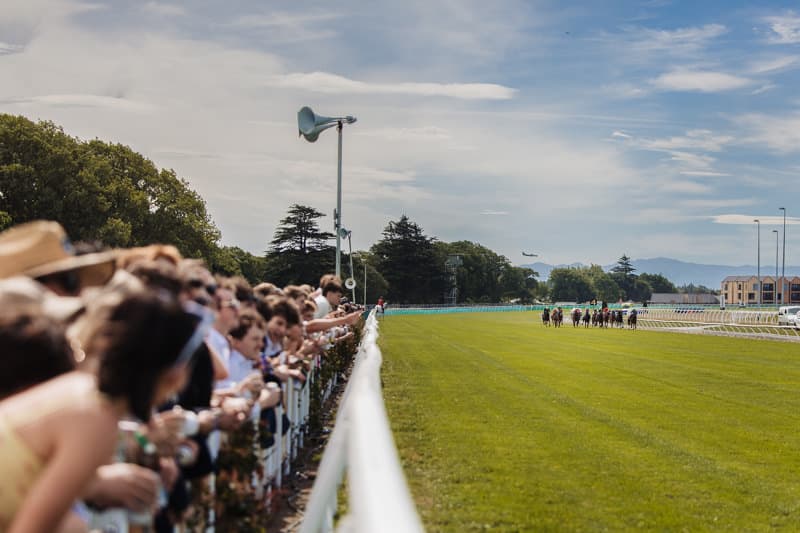
TAB New Zealand Racing Advisory Committee, has released its recommendations for the structural reform of New Zealand racing. Photo Credit: TAB
The TAB New Zealand Racing Advisory Committee has today released its plan for the structural reform of New Zealand racing and called on the racing codes and TAB NZ to commit to delivering the programme at pace.
The independent, pro-bono Committee - chaired by Sir Peter Vela - was convened to provide evidence-based advice on the industry's long-term sustainability. Its central finding is direct: the industry faces a significant and worsening structural deficit that funding alone cannot resolve, and that demands structural reform before the position deteriorates further.
The report identifies four interlinked faults that compound over time: horse supply in long-term decline, a growing share of funding consumed by duplicated administration, more than $700 million of capital locked in fragmented venue ownership, and no single point of accountability for industry-wide outcomes. On current forecasts, left unaddressed, the report warns these faults will exhaust the codes' reserves within two seasons and force sharp cuts to the stakes and returns participants rely on.
The report's message, however, is one of opportunity. Reform delivered at a wholesale level can build a modern, self-funding racing industry - returning more to participants, rebuilding its infrastructure from its own capital, and securing its place in regional New Zealand for the next generation.
"The New Zealand racing industry is at the most critical turning point it has faced," said Sir Peter Vela, Chair of the TAB New Zealand Racing Advisory Committee. "The industry has the assets, the people and the standing to build a strong, sustainable future. What it has lacked is a structure equal to those strengths - the one it has is working against it. The funding guarantee runs out after 2028. The time to act is now.
"Reform on this scale only works if the industry moves together, and at pace. The evidence is clear, the pathway is set out, and the potential is enormous. What it requires now is for the industry to act while the decision is still its own to make.
"For the people who make racing what it is - the owners, the trainers, the breeders, the clubs and the racegoers right across the country - this is about certainty, and an industry they can rely on. It matters well beyond racing itself: racing is a $1.72 billion industry supporting more that 12,500 jobs and livelihoods in communities across New Zealand.
"Stronger returns, a stronger industry, and a future worth investing in - that is what this reform programme can deliver."
The case for reform
The Committee's analysis sets out a clear evidence base:
• The thoroughbred foal crop has fallen 22% over the past decade and the standardbred foal crop 44%, with more than 500 thoroughbred breeders lost since 2015. On current trends, starter numbers fall a further 18% (thoroughbred) and 32% (harness) by 2035.
• Industry administration costs around $91 million a year - equivalent to 58% of everything returned to participants in stakes and bonuses. Up to $20 million a year could be redirected to participants and investment.
• More than $700 million of industry capital is locked in fragmented venue ownership, with no industry wide plan to deploy it while training and racing infrastructure remains under-invested.
• The industry carries a structural deficit of more than $50 million a year, and on current forecasts the codes will have exhausted their reserves by the end of the 2027/28 season.
The report models three broad financial pathways for the industry. Maintaining current settings draws down the reserves intended for infrastructure and long-term growth - consuming $130 million by 2035 - while reform-led pathways stabilise funding, free capital for reinvestment, and deliver stronger returns to participants over time. Structural reform is the only pathway under which the industry returns to growth, returning a collective $86 million more to participants by 2035 than the status quo.
The recommendations
The Committee makes five recommendations, designed to work as a single integrated programme:
• Unified governance - a single accountable body responsible for industry strategy, funding, calendar and marketing, with each code retaining its identity and code-specific expertise.
• A Strategic Property Vehicle - pooling venue assets under professional governance to unlock capital and direct investment to priority training and racing infrastructure.
• Tax and regulatory change - to stimulate domestic breeding and ownership and rebuild horse supply at the source.
• Crown-funded integrity - transferring Racing Integrity Board funding to the Crown, consistent with other sports, freeing industry funding for productive investment.
• TAB NZ modernisation - updating betting and gaming settings so TAB NZ can diversify, compete with offshore operators and stabilise long-term funding.
The report finds the reforms must be delivered together: in isolation, each improves part of the system but leaves the industry exposed. As a package, they reset the industry's economic model. Previous reforms delivered only temporary stability, because they did not address the structural causes of the industry's decline.
Next steps
The Committee has set clear expectations for the steps the industry must now take to secure its future.
It recommends the immediate establishment of an independently chaired governance group - bringing together representatives from each code, TAB NZ and the Advisory Committee - charged with designing and executing the reform pathway at pace, based on the Committee's recommendations and against clear delivery milestones.