Racing
 League
 Rugby
Rugby
 Football
 Cricket
 Golf
Golf
 Sport Nation
 Motorsport
 Netball
 Basketball
 Combat Sports
 Olympics
 Other Sports
 Live sport on SN this weekend
Fast, fearsome and frustratingly fragile: The battle to protect New Zealand's quicks
Alex Chapman • October 17th, 2026 7:00 am

Will O'Rourke | Photo: Chris Symes/Photosport
Like a dependable red-wine grape, New Zealand’s crop of quicks continues to flourish.
Year after year, for the best part of two decades, the fast-bowling harvest has remained remarkably fruitful.
But producing a good crop is one thing. Protecting it is another.
Fast bowlers, like vines, require careful management. Push them too hard, too often, and the risk is that the very thing producing such a rich harvest begins to wither.
And while New Zealand has assembled one of its most exciting collections of fast bowlers, keeping them on the park has proved an altogether different challenge.
The nicknames associated with them, whether it be cartel of quicks, battery of bowlers, or other iterations given, adds to the theatre.
But injuries have repeatedly interrupted or even ended careers, disrupted international campaigns, and left some of the country's most promising talents watching from the sidelines.
It raises questions about whether enough is being done to protect them, whether the systems designed to manage their workloads are fit for purpose, and whether the next generation is being adequately educated about the demands of the craft.
After all, they aren’t indestructible. They aren’t immune. And their presence in the injury ward over the last year has shown that.
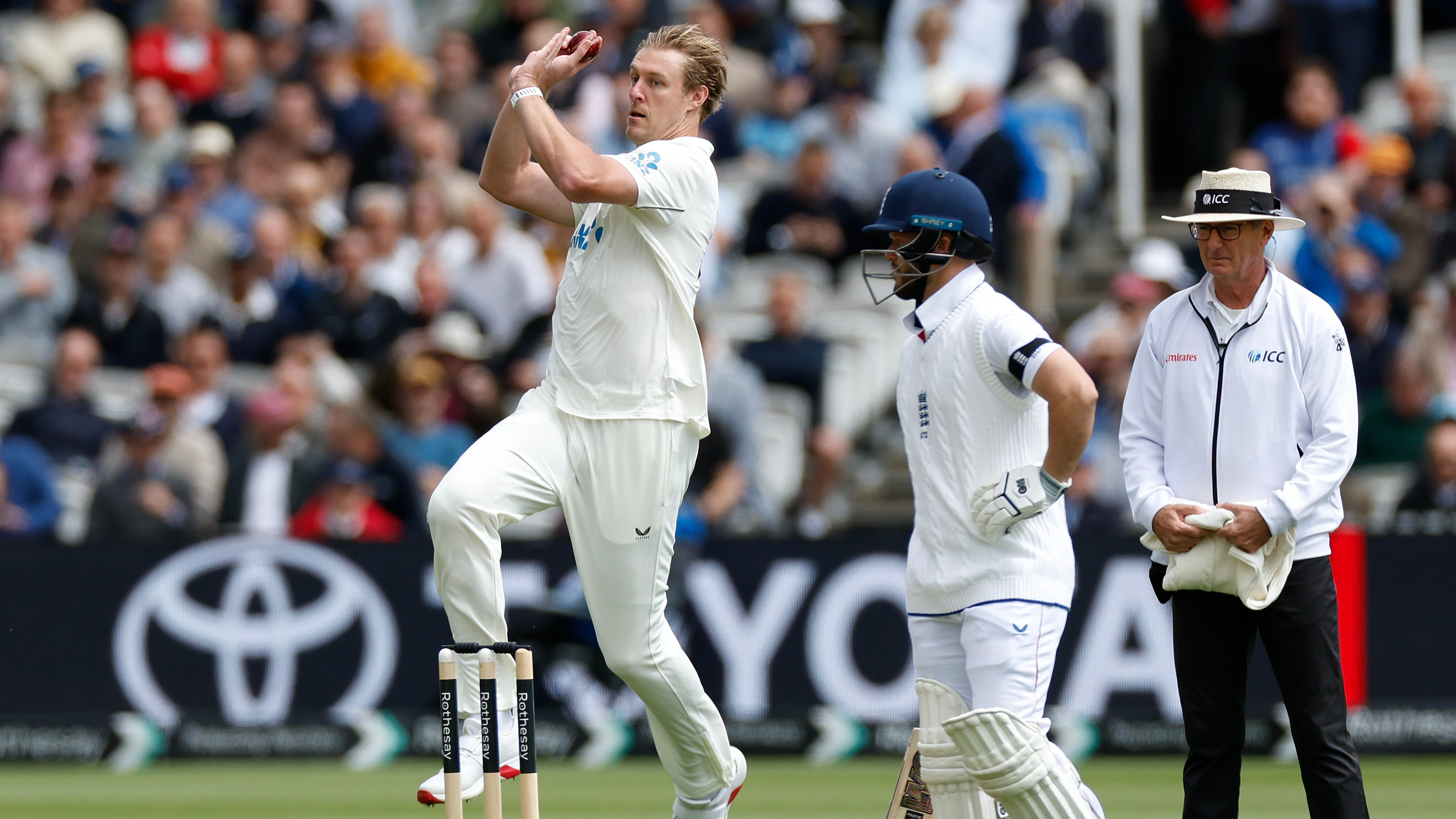
Kyle Jamieson at Lord's | Photo: Matthew Impey/Photosport
Some are short stints on the sidelines and part and parcel of the craft - after all, fast bowling is tough. It consists of the slamming down on the L4 and L5 vertebrae at 7-10 times the bodyweight, counter-rotating, before bringing in lateral flexion. But others have meant extended periods off the field.
Of the current group, Matt Henry’s unlikely to become a dairy farmer given his baby cow issues, and Kyle Jamieson’s finally back (‘scuse the pun) after extended and regular stints out (more on that shortly).
Ben Sears is currently rehabbing ankle surgery in the latest of a long list of problems, while Wellington teammate Nathan Smith’s side strain has, for his and New Zealand’s sake, been the extent of his issues.
In a trio of those who tease and tempt with searing pace, Lockie Ferguson has had his share of soft tissue issues, regular problems means Adam Milne has been in and out more than a cake being checked in the oven, and Matt Fisher - the least-experienced of the group - missed a big chunk of the last domestic season with a shin problem.
Zak Foulkes is facing an unknown timeframe for his return from a torn tensor fasciae latae (TFL) that coach Rob Walter described as "tricky" and "not one that's seen too often". Blair Tickner’s dislocated shoulder and concussion weren’t bowling-related. Though as one teammate pointed out, the former was “self-inflicted”.
How previous Blackcaps captains have influenced Tom Latham | Cricket Nation
And then there’s Will O’Rourke.
Arguably the most-tantalising of the group, who offers terrifying pace and ferocious bounce that's described by teammates and opposition as “yuck to face”. Well, he did his jimmy jack last summer and spent almost nine months rehabbing it, only to now miss the upcoming tour by India with a calf issue. Fans are holding their collective breath over his availability for the tour to Australia.
It seems the reigning Sir Richard Hadlee medalist, Jacob Duffy, is the only one to have escaped serious injury (touch wood), which seems astonishing given he had to endure 154.3 overs in a three-Test series last summer that also saw the debut of Michael Rae.
For all the advancements in sports science, strength and conditioning, and workload management, the injury troubles plaguing New Zealand's current generation of quicks are hardly a new phenomenon.
"I think I had six stress fractures in the back." Shane Bond recounted to Sport Nation.
"I had runner's knee, but it's interesting, I didn't really have many other issues. I didn't really have any ankle issues, there were no shoulder problems. It's one of those ones when you look back over the course of your career, you go 'how did I avoid a broken finger for 30 years of cricket?'
“But I suppose I was just one of the players who had a natural ability to bowl fast. I didn't have a great training ethic when I was younger. I had probably a slightly dodgy action and I ended up with injuries."
Bond's Cricinfo profile perhaps best summarises his career; “fast, fearsome and frustratingly fragile”.
The Canterbury quick’s 87 Test wickets from 18 matches at an average of 22 is the third-best for a New Zealander, while his strike rate of 38.75 is the third best in history for those who have bowled at least 2500 deliveries.
From his 82 ODI's, he snared 147 wickets at 20.88, with five five-fers and seven four-wicket hauls.
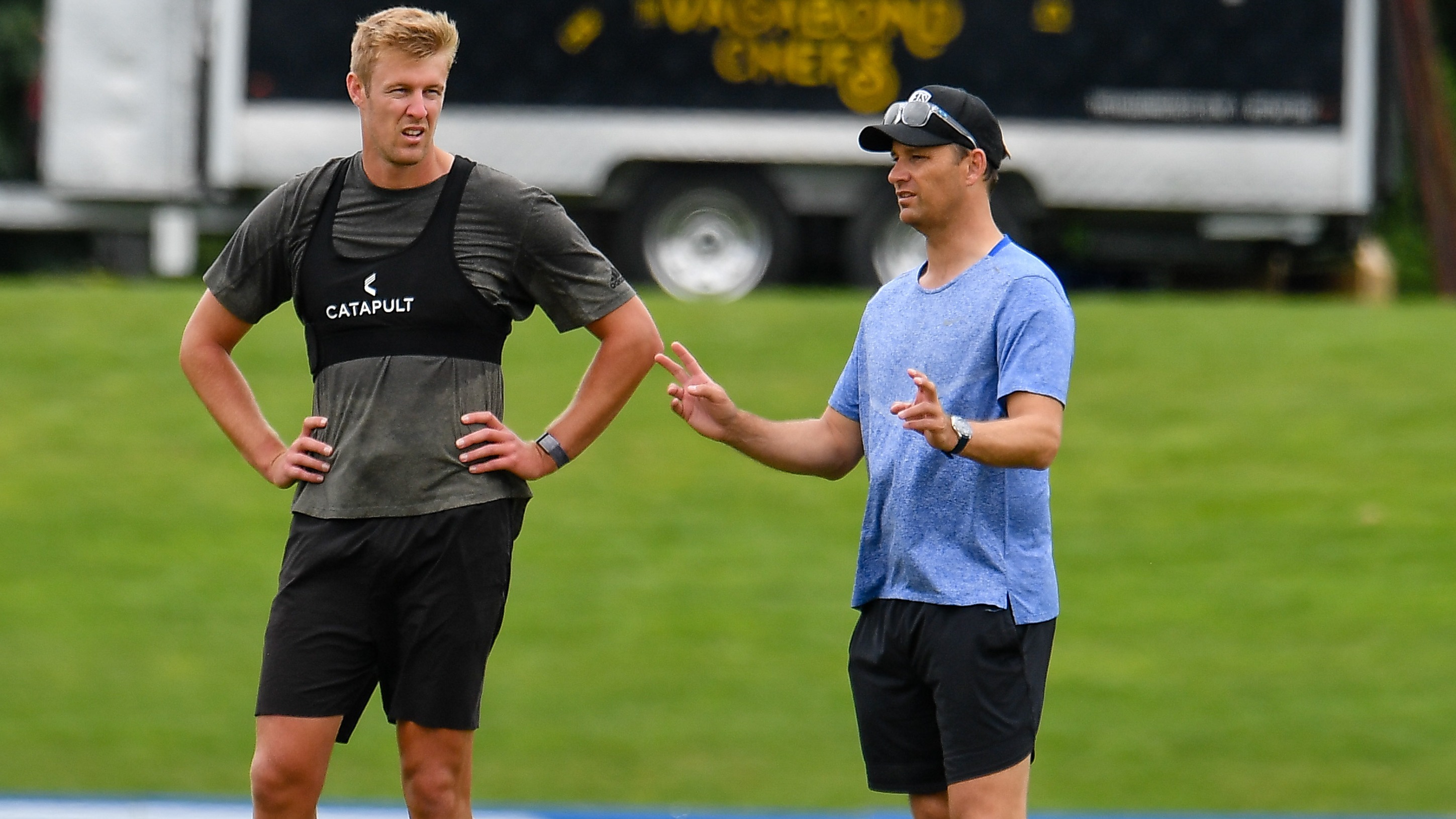
Shane Bond | Photo: Photosport
But in a career filled with more time wearing surgical gowns than the black cap, Bond went from a world class quick to one of the greatest what if’s.
Has the premise of fast bowlers being injured become normalised? Some say yes. Others, like Bond, disagree.
But such is their frequency, the headlines often write themselves. Given the repetitive and consistent nature of the injuries, it’s as simple as highlight, delete name, replace with another as the trend continues.
‘New Zealand fast bowler XX to miss World Cup after picking up a XX injury’
‘Injury blow for XX, ahead of XX’
‘XX out for 4-6 weeks/months with XX injury’
Often at the core of those are stress-related injuries. At the extreme, they’re stress fractures.
Others have spoken of over-training resulting in fatigue or injury, with raised concerns passed off as soreness or manageable. That, as has already been seen in domestic circles this season, results in more-serious injury.
Having a stress fracture, or a ‘stressy’ is in a way seen as a rite of passage. It’s a badge of honour. There’s a viewpoint that the wisdom it affords is only revealed through the pain it inflicts.
At least, that’s what some would have you believe.
As one source put it with tongue pressed firmly against cheek, “haven’t had a stressy, not a fast bowler.”
Primarily with fast bowlers it’s associated with the lumbar; however it's also commonly seen in shins and feet, as they cop the compounding of force.
Per Health NZ, a ‘stressy’ is “a small crack in a bone often caused by overuse,” while John Orchard, the Chief Medical Officer for Cricket Australia described back injuries as having been “the ‘achilles heel’ of fast bowlers in cricket for the last 150 years, although it has been the last 40 years when it has been recognised that the signature lesion is the lumbar stress fracture.”
Jamieson is all too familiar with that feeling in his back. Sometimes described as ‘having a hot knife piercing your spine’, the Blackcaps quick has missed more tests than he’s played in the last four years.
And it’s not even close.
Rob Walter on preparing Zak Foulkes to play an allrounder role with the Blackcaps | Cricket Nation
Having burst onto the scene in February 2020, Jamieson played 16 of New Zealand’s 18 Tests over the next 28 months. But ongoing injury meant he’d go on to play just five of the 29 from December 2022 through to now.
And while he’s “much more at peace with it now”, Jamieson revealed to Sport Nation there were periods of him being “massively” angry.
“And I still am to an extent” he added.
“There's a part of that trauma that I still have to, not manage, but is a part of my journey. I can't go back and change that. But at the same time, I've learned a heck of a lot through it. And I'm so glad that I was able to learn and discover some of the things that I was able to at 28, 29, 30, than finding out post-career and being like, ‘what if?’
“So I've got a chance now to kind of put some of that stuff into practice and see how it plays out over the next four, five, six, whatever years, rather than having to reflect back and going, ‘oh, if only. I'm just going to hopefully not be one of those bitter ex-cricketers that are on the sidelines.”
Tom Latham's view of franchise cricket | Cricket Nation
Jamieson's experience is far from unique.
But while injuries are an unavoidable part of fast bowling, questions remain about whether more can be done to reduce their frequency and severity.
Lockie Ferguson is among those who believe there is room for improvement.
“Fast bowling, stress-related injuries are big.” Ferguson told Sport Nation, “And I've seen an increase in that. And I've actually talked to New Zealand Cricket and the facts back that up as well. So I want to do more for it with the learnings I've had.
“There's been stress-related injuries from Blackcaps all the way through to a 15-year-old I know who bowls quick for Parnell, who had stress-related injuries. So, there's more we can do and I want to be that person to help with that.”
There’s a commonality to the injuries though.
Essentially and in simple terms, if you bowl too much or when injured, train poorly – whether that on the field or in the gym - or have a bad action, you will break.
Blackcaps coach Rob Walter on facing India and Australia in 6 consecutive Tests | Cricket Nation
For those of the younger vintage, rapidly moving from not bowling, to bowling, or transitioning from a winter sport to cricket, is also an area of focus and has been proven to result in injury.
Such changes can expose bodies to demands they haven't yet been conditioned to withstand.
But such vulnerabilities aren't confined to those still learning their craft.
“It's kind of trying to find the balance between how I talk to it.” Jamieson said.
“How my body had been trained or stacked up from a physical component left me extremely exposed. The loading - or lack of - left me extremely exposed.
“And it was just there were probably three or four areas that just were so bad that you put them all together as this cocktail. And then you rush someone back into the highest form of the game, and you think, ‘oh yeah, he'll be alright’.
“But if you gave that same blueprint to anyone else, they're going to be in the exact same position I was. You'd be super lucky if you managed to survive what I was handed or programmed. We’re kind of still seeing it at the moment.
Jamieson feels the preparation and advice he'd received had left him more vulnerable than he should have been.
“We know how to bat and bowl and do that stuff, and you trust the other experts in that field to give you the right advice to stay on the field. And it wasn't working for me.
Tom Latham on using the Blackcaps' cartel of quicks | Cricket Nation
"But I felt there was a lot more and that kind of set me off on that journey and once I started to unpack and find out there was actually a heck of a load more to it than what I'd been told or understood, it gave me a lot more faith that I would return and that I would stay on the park. But equally, the emotions that kind of come with that too was something that I did sort of tackle and still have to deal with today.”
Others who spoke to Sport Nation on the condition of anonymity believe there’s “inept” coaching and education at various levels, particularly around load management and biomechanics.
As one put it “players, kids are breaking because they don’t know how to bowl or look after themselves properly.”
Ferguson is more measured in his assessment.
He's partnered with New Zealand Cricket to bring back a national youth fast bowling search after an 18-year hiatus - a competition he finished second in behind Auckland Grammar and Blackcaps teammate Jimmy Neesham in 2008.
However, he wants the care for the youngsters and knowledge shared to be as important as unearthing the next Bond, Ferguson et al.
“We've had the same system since I started professional cricket. Do I think that it's working well? I don't know; that's up for probably a jury. But I think we can improve on it. And so we're trying to do that.” Ferguson asserted.
For many, the current monitoring system resembles that used for a heartbeat. It’s loaded and programmed into a spreadsheet, and each training session, whether it off a walk-through, half run-up, full run-up, or in game, is entered into the spreadsheet to allow workloads, spikes and acute-to-chronic workload ratio (ACWR) to be viewed and managed.
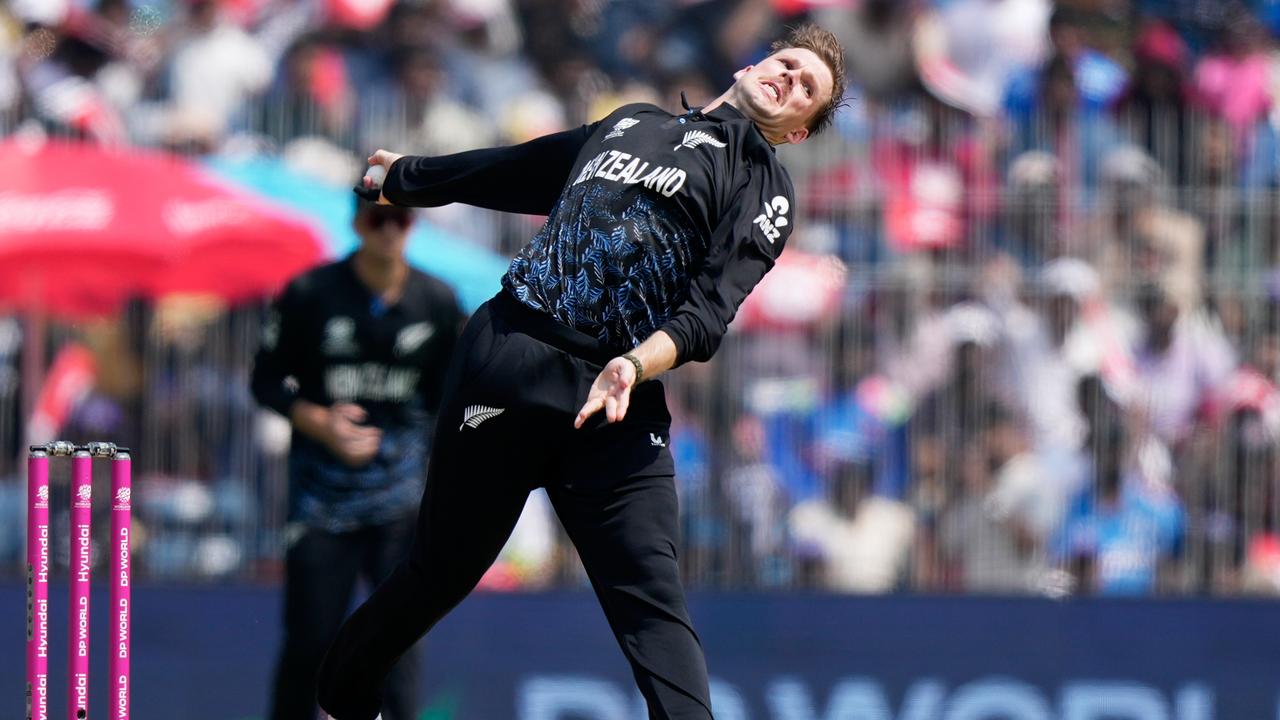
Lockie Ferguson | Photo: AP
Workload refers to how much bowling a player does, while spikes are significant increases in the volume or intensity of that bowling.
ACWR is the comparison of output v preparation over time, i.e. is your body ready to do what you're going to ask it to?
"The basis of workload management at the moment is you just count how many balls you bowl per week and try to keep that consistent,” Ferguson explained.
“Even saying it like that sounds quite archaic, right? Because as bowlers, we all know you bowl off half run, you bowl off full run, and then you also have match. So, the load on your body in all those scenarios, as well as on grass or on astroturf are different.
And the current system doesn't equate to that. And so we have problems. And as well, we all enter it manually."
In other words, two bowlers could deliver the same number of balls but place very different demands on their bodies depending on how, where and at what intensity they bowl.
It is completely personalised and unique.
The bowling sessions – both game and training - aren't the only focus though, with the delay around injury also a consideration to the balance of time at the crease. It is, as one source put it, both art and science.
Ferguson's desire to modernise the process and make workload information more accessible has led him to create his own app, Yorker.
“There's spikes. We need to take care of those.” Ferguson emphasised.
“But more importantly, I think there's an education piece where it seems daunting to talk about bowling loads, and it's actually not that difficult. So we try to make it really easy to track.
“There's no getting rid of injuries in fast bowling, but it reduces the chances and hopefully makes you bowl faster, but also for longer.”
That lack of knowledge and education was put in another way by a bowler Sport Nation spoke to.
"Imagine if you wore a Whoop band, and you put in your data and info, but had to send it away, and actually then couldn't always access it. And didn't know what you were doing right or wrong. That's kind of how it is. It'd be great if we had access to our own medical info."
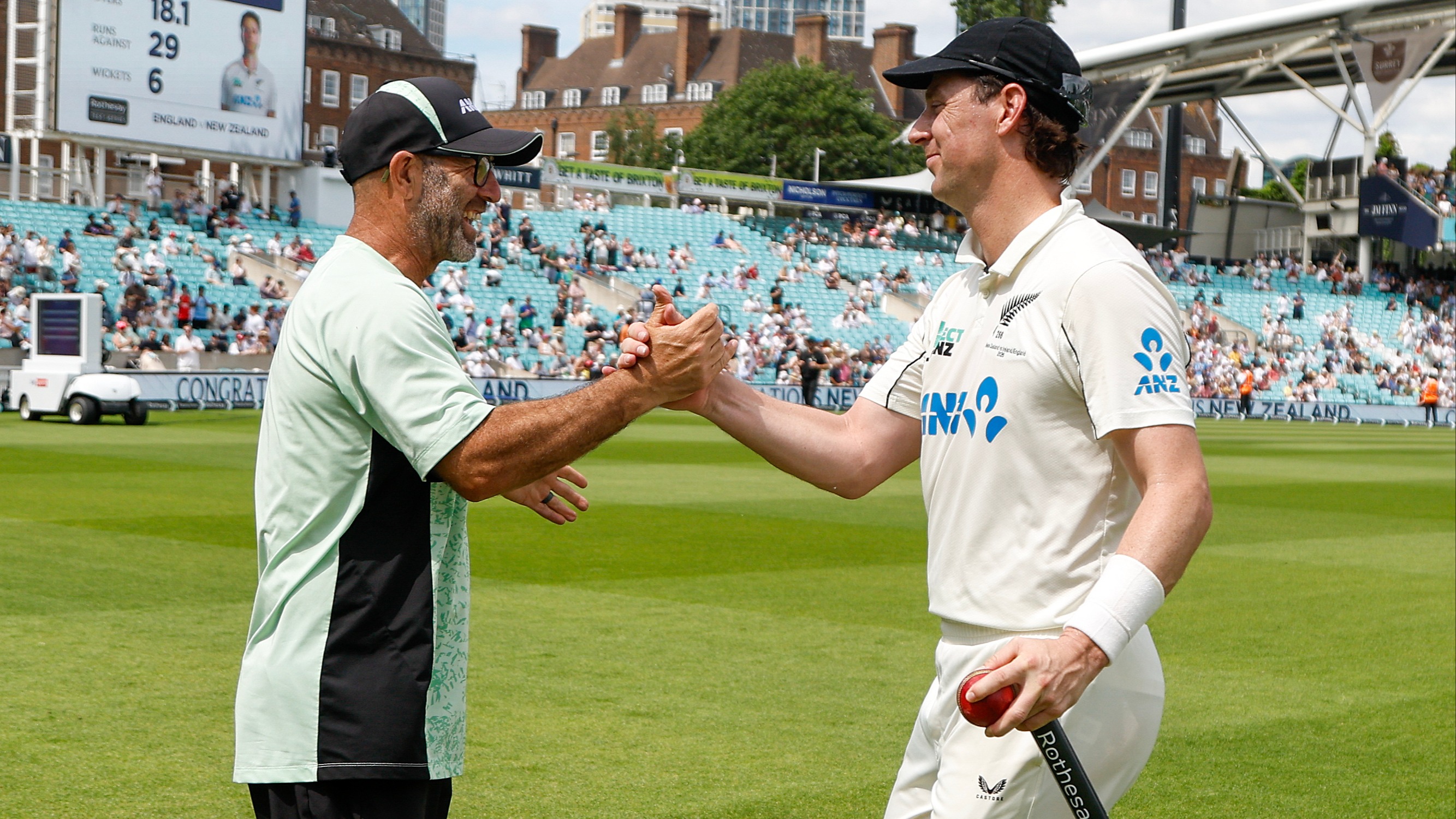
Rob Walter | Photo: Photosport
While Ferguson believes the existing approach could be modernised, Blackcaps coach Rob Walter emphasised the complexity involved in managing workloads at international level.
Walter described the Blackcaps setup as having a "rolling loading sheet that we're on top of all the time that gets updated regularly.
"There's so many factors that go into loading, especially when they're on the back of injuries. What type of injuries those were, the length of the layoff, etcetera. And then you've got the age and stage of each of the bowlers and their resilience and tolerance. All of that goes into the melting point.
"Jake Oram does a wonderful job along with the medical unit in Chris [Donaldson, Strength and Conditioning coach] and Brett [Harrop, Physio] to sit and work on what the loading looks like.
“I suppose the biggest challenge is getting ready for test matches when it's preceded by a jam-packed T20 and ODI series as well, hence we've had to make the decisions we have in order to ensure we give our test bowlers the best chance of being ready to play test match cricket."
While much of the discussion around injury prevention centres on how often fast bowlers bowl, Jamieson's experience highlights another consideration: how their bodies are physically prepared to withstand the demands.
It left him confronted with, and facing his own career mortality.
His search for answers eventually led him towards the mechanics of his own body.
“There was a reality there that this has happened multiple times. I just always had this gut feeling that there was more to it. I just didn't believe it was a me thing. And I don't know why I felt like that.
“I just thought there was more to it and kind of just kept us doing the same things and just trusting that the advice I was getting was the right stuff.”
As someone that loves talking and learning about fast bowling, and has a fascination and curiosity for it, Jamieson went about trying to work out what was going wrong.
He realised the education piece was missing from the six foot eight puzzle. And he doesn't think he's the only one.
“Your back's your back, like it's fine, but everything else was so out of sync and I was really, really good at cheating and finding a way to just do what I wanted to do.
“Whether that's falling away, using certain parts of your body more than the others and overcompensating, and none of my body was set up to like absorb load apart from my back.
“So you're chucking X amount of force through your body, and it's just skipping your ankles, skipping your knees, skipping your hips - your back's gonna blow, right?
“And I'm reasonably tall and it was a little bit more stress going through, going through my spine than someone at you know five foot six or something like that.”
Rob Walter on the power and excitement of Seifert and Allen as Blackcaps' T20 opening pair | Cricket Nation
Jamieson believes a lack of knowledge and understanding around movement and the kinetic chain - as well as the interconnected muscles and joints involved in generating, transferring and absorbing force - contributed to the pressure being placed on his back.
“My left ankle had virtually zero movement in it, or zero range in it. And I'd just been told the whole time that ‘oh it just is what it is’. And it took two or three weeks with the crew I was working with, and it was exponentially better. So I figured out that, 'nah, it actually can move and can absorb some force'.
“But it was mostly around the pelvis area - my glutes were switched off. I didn't know how to hinge. I'd been putting 200kg of weight on my back or doing deadlifts and squatting all that sort of stuff and couldn't hinge to use my glute.
“So I'm just shunting all that weight through areas that aren't supposed to absorb that.”
For Jamieson, the discoveries challenged and changed years of understanding about how his body moved and absorbed the forces involved in bowling.
“There's some great squat videos of trying to move genuinely, 10 centimeters and I lose balance trying to do it properly. And then, you get to a point now where it's I can just put weight on my back and squat and it's fine. But I had no ability and that had been me for however many years.”
Tom Latham on the Blackcaps' hurdle of beating Australia in Australia | Cricket Nation
His experience underlines the value of not only monitoring the frequency and intensity of fast bowlers bowling, but also understanding how their bodies are prepared to do it.
It's an approach Shane Bond has increasingly embraced, particularly when it comes to the next generation.
The suffering he endured as a player was what steered him towards the coaching path with fast bowlers.
Having been Blackcaps bowling coach from 2012 until after the 2015 World Cup, the 51-year-old has now coached around the world.
He agreed that education and access of information should be at the forefront of focus for all - regardless of age or level - and often spends times with coaches of all levels to help.
"I always try to use the analogy of either if you were starting off as someone who's a little bit like me as a couch potato, when you wanted to get in the gym or go running, you just wouldn't go into the gym and just lift as hard as you could, as heavy as you could. You would go big reps and low weight.
“And it's almost like if you're the same thing, if you are just deciding to run, you might just go for a walk, and then you go to a jog and then after a while you go for a run. And it might take a few weeks to build up to that.
"And it's the same sort of philosophy with bowling is just take your time, ease into it, build up. And the longer you can take that build up, the safer it is. And on top of that with kids, it's just get them to do some strength and conditioning, strengthen up, especially the bottom half.
Kyle Jamieson on his long road to recovery from lower-back stress fracture to take 5 wickets at Lord's | Sport Nation
“All the kids I know here, they love the beach muscles, they love the chest. But it's the bum, hammies, and calves that make a big difference. And the earlier they start to strengthen those, whether it be bodyweight stuff, and then learning the right technique to add some weight to it, that can make a massive difference."
Such is his determination to ensure the safety of the next generation of fast bowlers, Bond works closely with his son Ryan – a teenage quick playing for St Andrew's College's 1st XI in Christchurch.
"I don't know if you'd call him my test case, but it's almost like a test case. And I'm lucky that he listens," he joked.
"I was pretty lazy and I didn't touch a gym till I was about 18. Whereas Ryan started getting into bodyweight work at 14, and after a year of doing that, we've sort of transitioned into lifting now.
"He has got a man's build, whereas I looked like I had a dad-bod at 18. He looks very different to me.
“And then I think for him, it's about I want him to bowl overs, but lots of overs over low intensity, because it's the way you can work on action and technique with bowling.
"I want him to bowl overs, but I also want him to bowl lots of overs at a low intensity. Because it's the only way you can get an action and technique for bowling. And so, we'll bowl half an hour, 10 overs, we'll talk about our technique, what it looks like, use the camera phone, and try to get him to understand his own movement patterns."
Bond says Ryan bowled 900 overs from August to March, which he accepts may sound like a lot, but when broken down into manageable weekly workloads - often around 20-25 overs, with approximately 15 at full intensity - the emphasis is on building gradually rather than making sudden jumps.
"But it's saying that if you look at all the international bowlers who are injured, who've had stress fractures, and a lot of them have come out of the IPL where you make that massive jump from T20 to Test matches.
“It doesn't matter who you are, how fit you are, if you raise that load and intensity too fast you put yourself at risk."
Bond's body paid the price. Jamieson's spent years searching for answers. And Ferguson's determined to ensure the next generation is better equipped than those before them.
Different experiences, but a common thread.
Fast bowling is a punishing craft. Injuries are inevitable. Though does the extent of the suffering have to be?
Greater education, better preparation and more accessible information could reduce the risks.
That could be crucial to producing the next vintage.
Tune into Sport Nation for live ball-by-ball commentary of the Blackcaps' T20 series against India - download the app today on Google Play and the App Store - find your frequency here.